

Making homemade pasta is surprisingly simple, and with just a few ingredients and a little know-how, you too can make it for a special occasion or even a weeknight dinner.
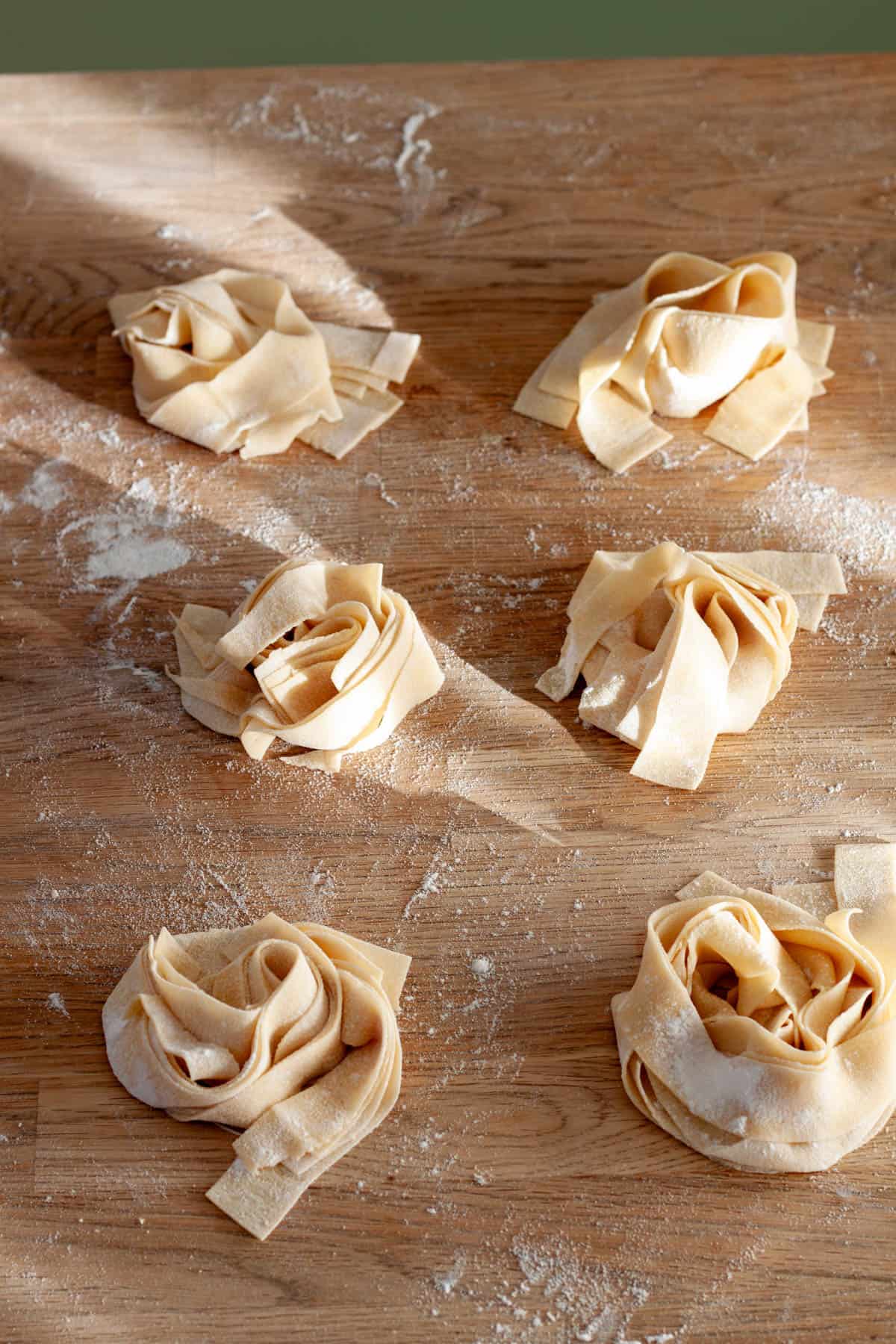
Homemade pasta is a recipe that may seem daunting if you've never made it before. Surely fresh pasta is only for chefs or Italian grandmothers! Well the truth is anyone can (and should) make fresh pasta, and if you've never made it before, there are a few important things to keep in mind. Read below to learn why the ingredients and technique for homemade fresh pasta matter.
Jump to:
Ingredients
With just a trio of simple ingredients, it's important to understand why you use each for fresh pasta. Here are the ingredients you'll need for this recipe:
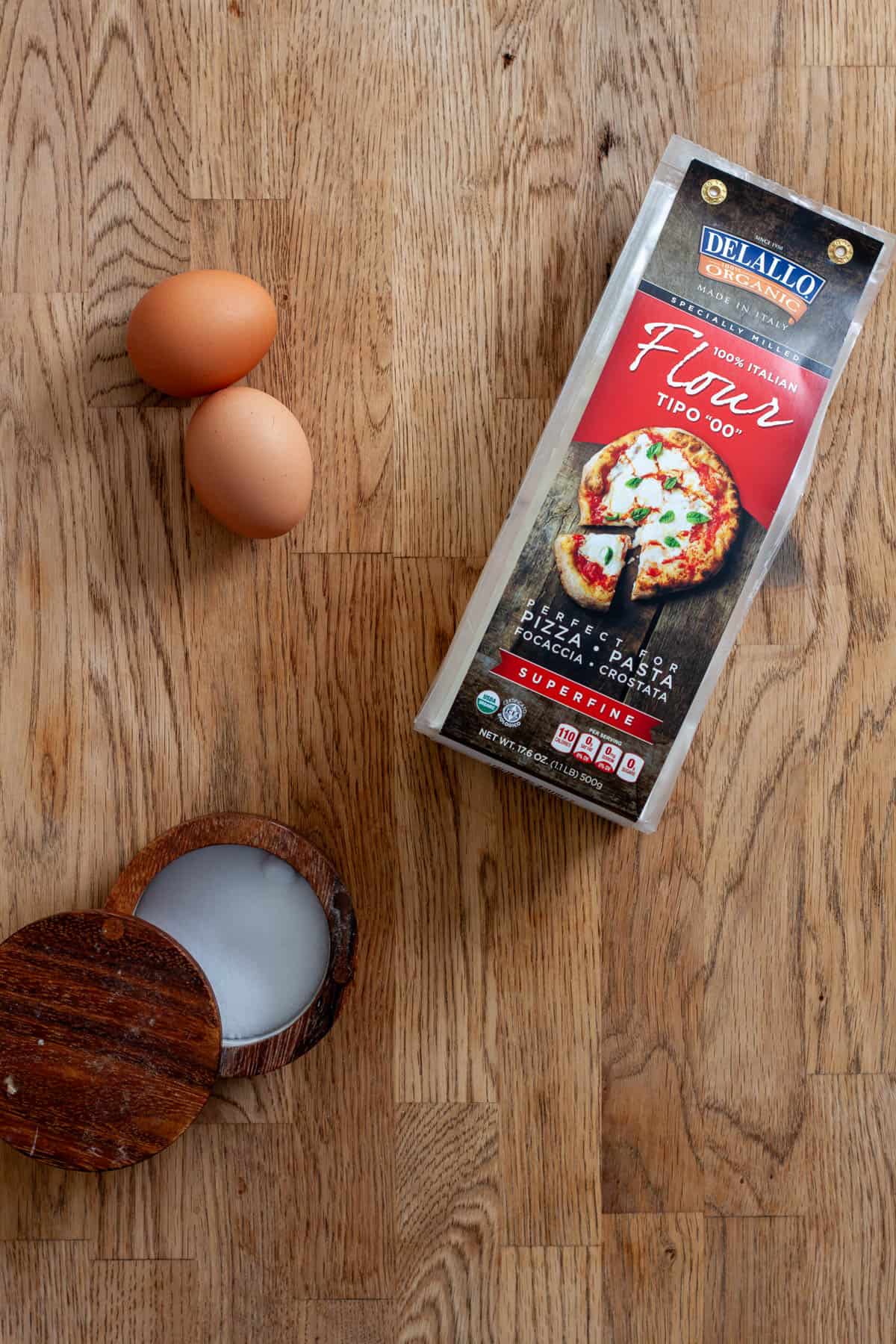
- 00 Flour. This finely ground Italian flour is ideal for a range of recipes, including pizza dough, breads and homemade fresh pasta. It is, in fact, as fine a flour as you can likely find. Beyond the grind, 00 Flour can be a bit confusing. If you buy "Italian" 00 flour, it may have a protein content closer to bread flour than all-purpose flour while if it's made with American wheat, the protein is likely closer to AP flour. All you should know is that 00 Flour will produce a strong, elastic yet tender fresh pasta. All-purpose, on the other hand, will have a softer, less toothy texture. Find it in many grocery stores or specialty markets.
- Eggs. Use a large egg for this recipe. There is no need to fuss about room temperature vs. cold eggs. Use one right out of the fridge.
- Table Salt. I always add a pinch of table salt to my fresh pasta simply for flavor. I do not recommend a coarser salt like kosher, as we want to keep the dough smooth.
See recipe card for quantities.
Instructions
Making homemade pasta requires a bit of effort, but once you've made it, you'll see it's quite simple. Here is how to make fresh pasta dough:
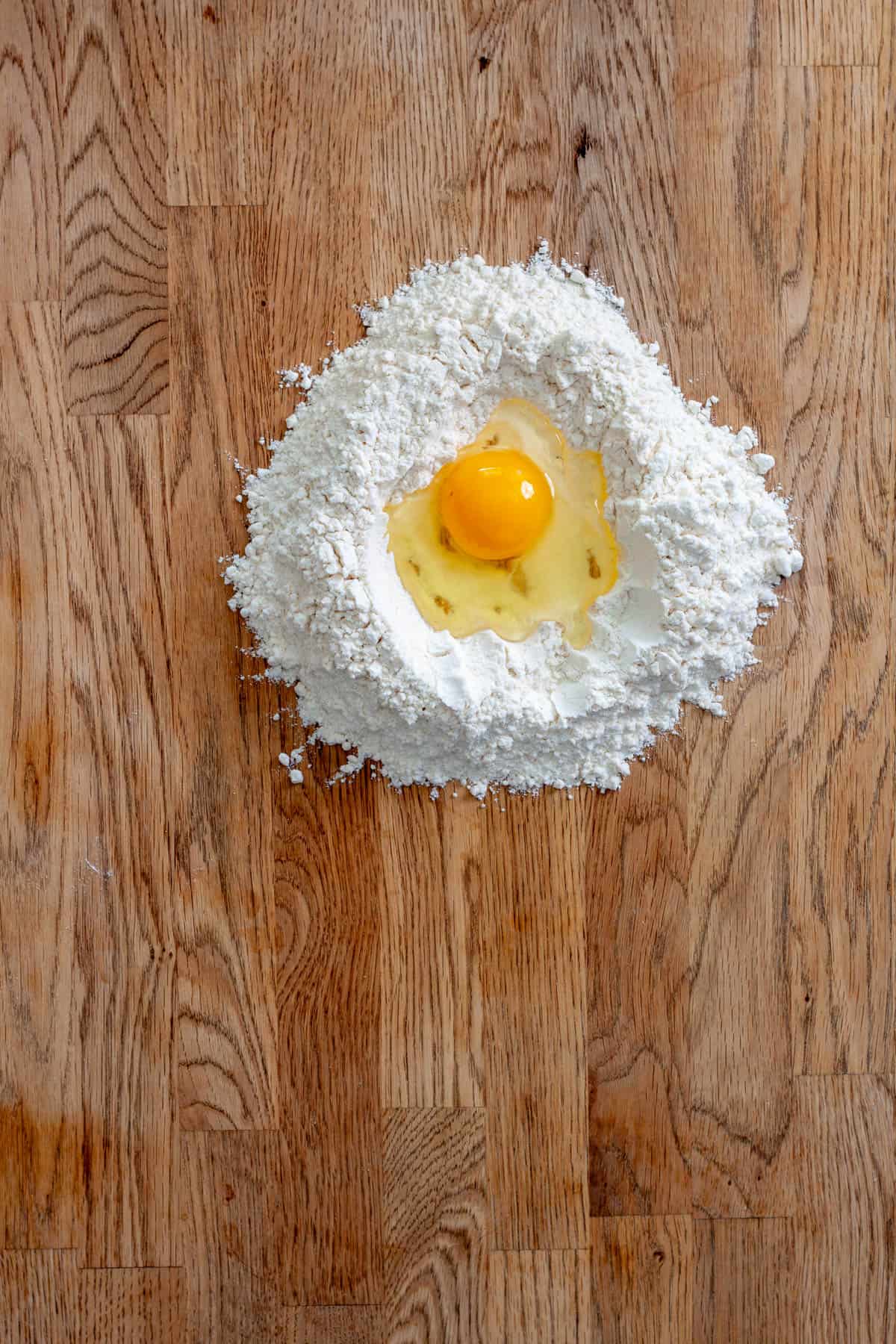
Start by placing the flour on a clean work surface then use a spoon or your knuckles to create a large divot. Crack in an egg and add a pinch of salt directly to the egg.
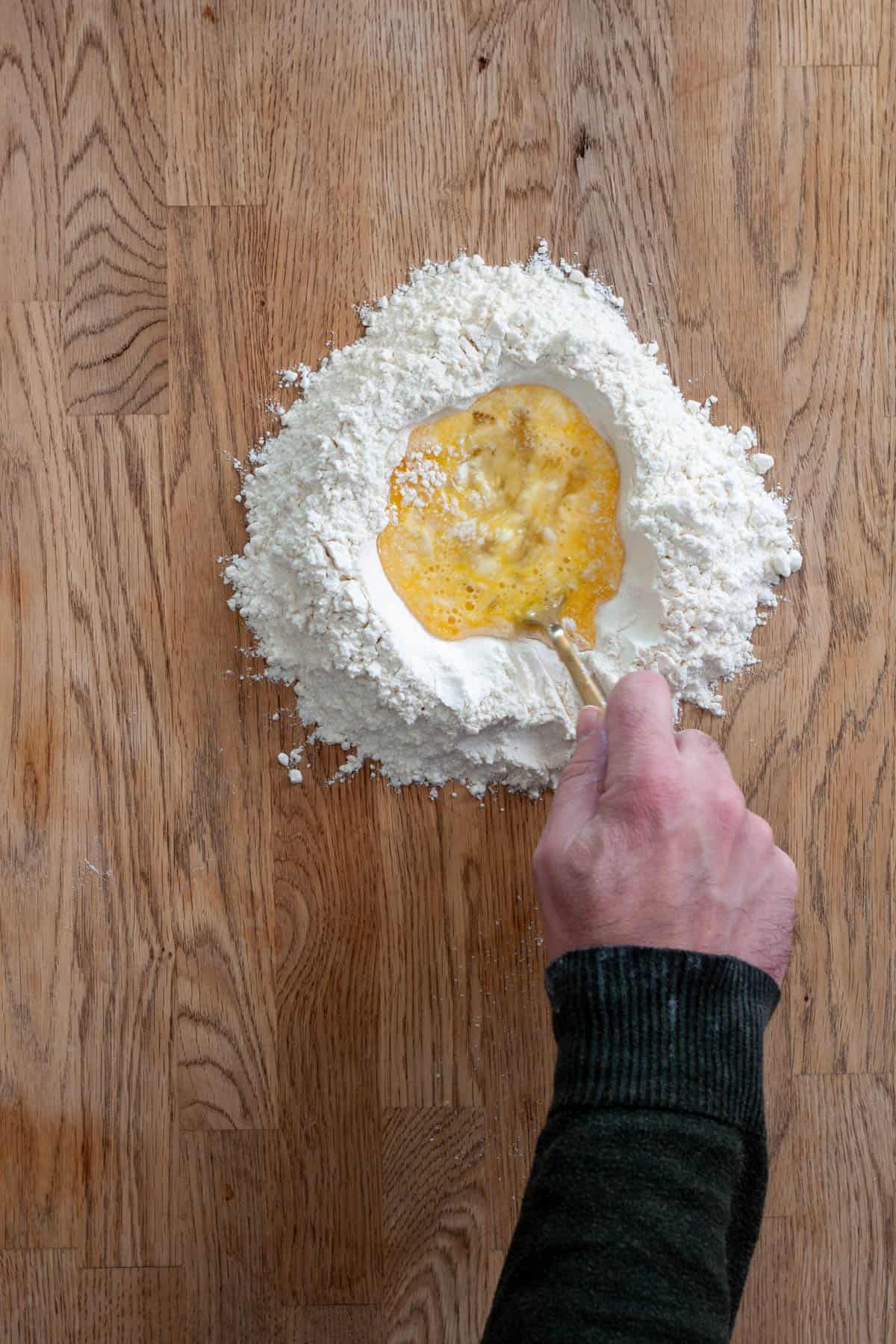
Use a fork and whisk the egg, essentially making scrambled eggs. Be sure to keep the edges of the flour in tact to avoid the egg spilling everywhere.
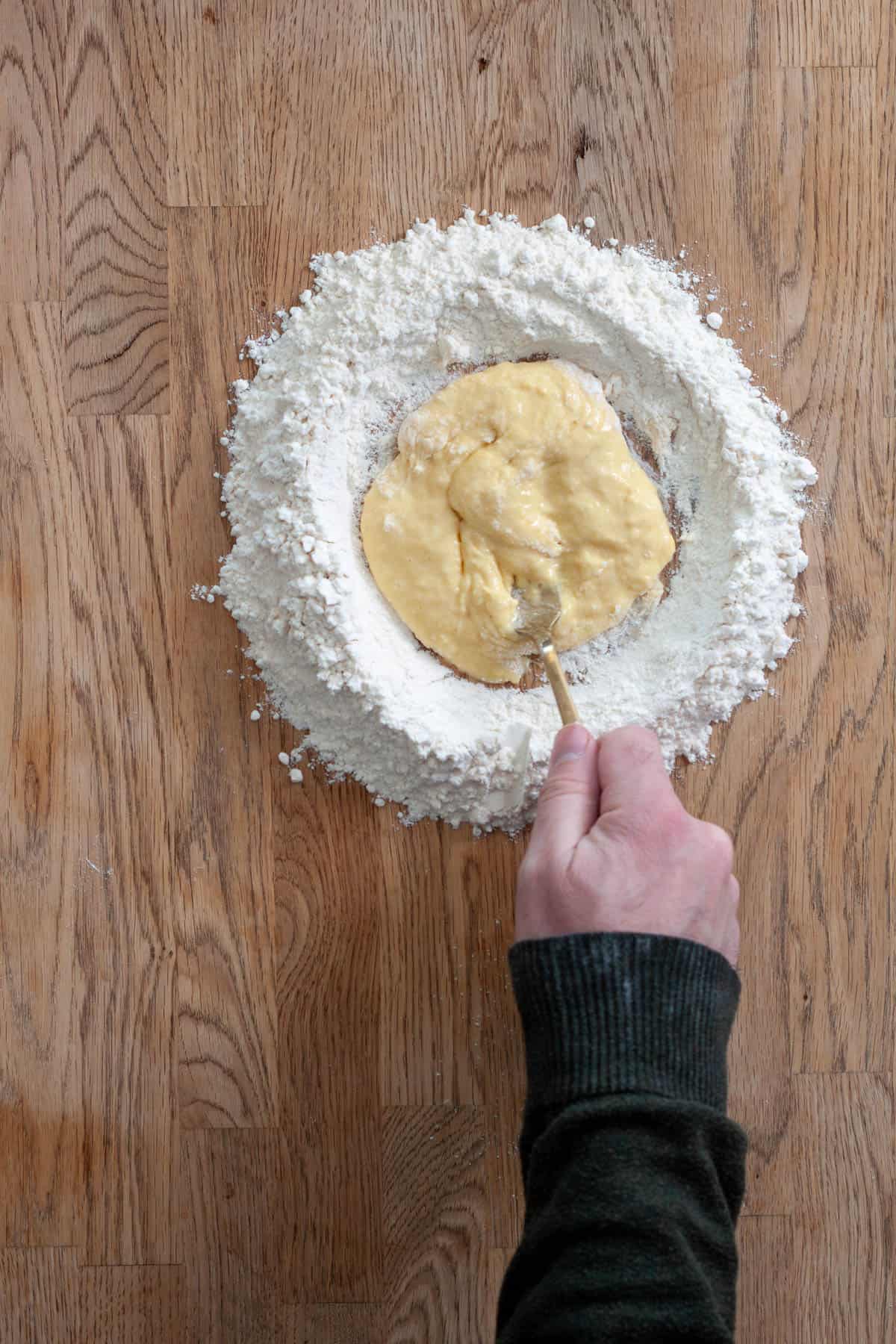
Continue to whisk, bringing in some of the flour from the sides, until the dough starts to come together.
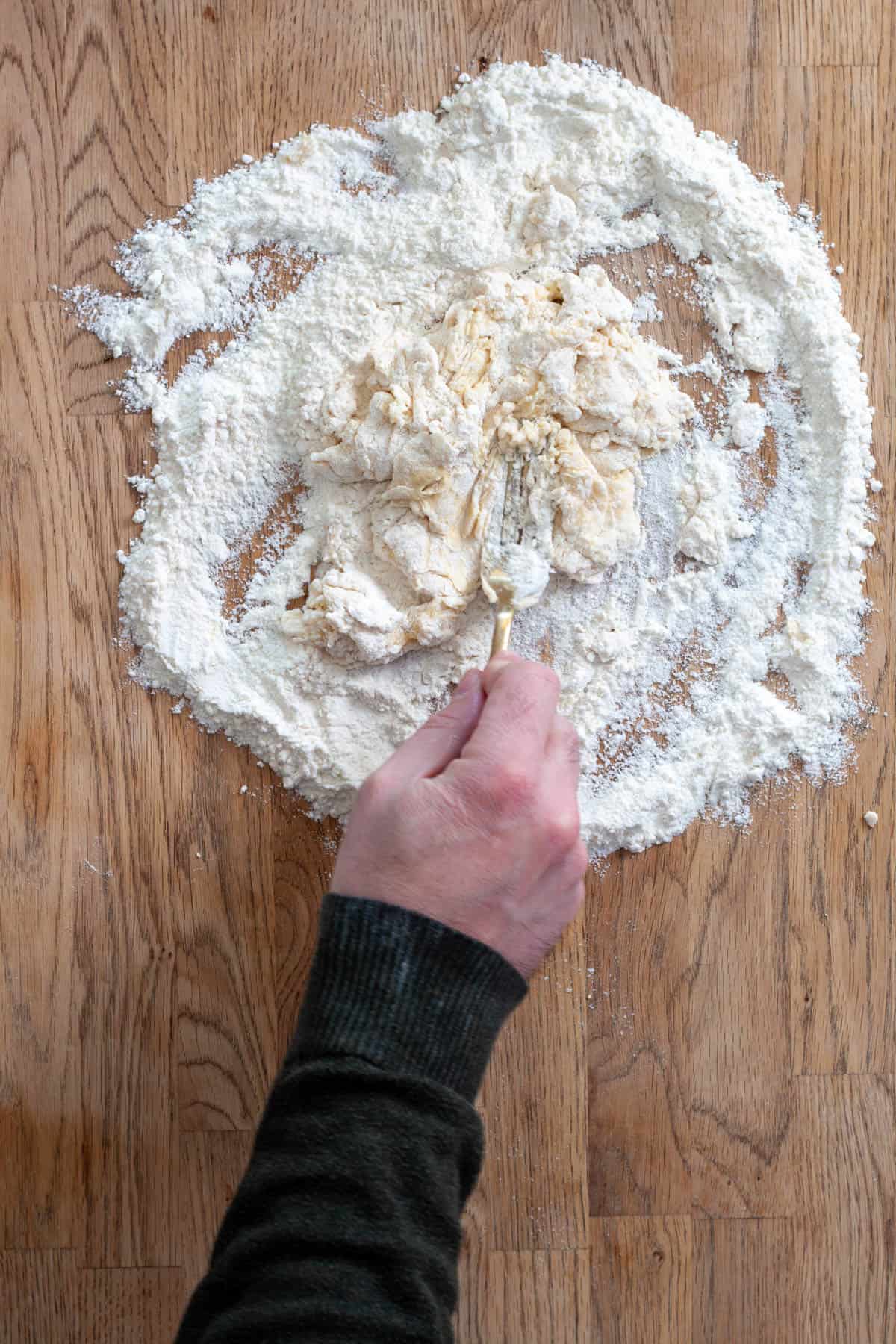
At this point you can knock the walls of flour down and move the dough around the flour to start collecting as much flour as possible. Add a touch of water, as needed, until the dough starts to just come together.
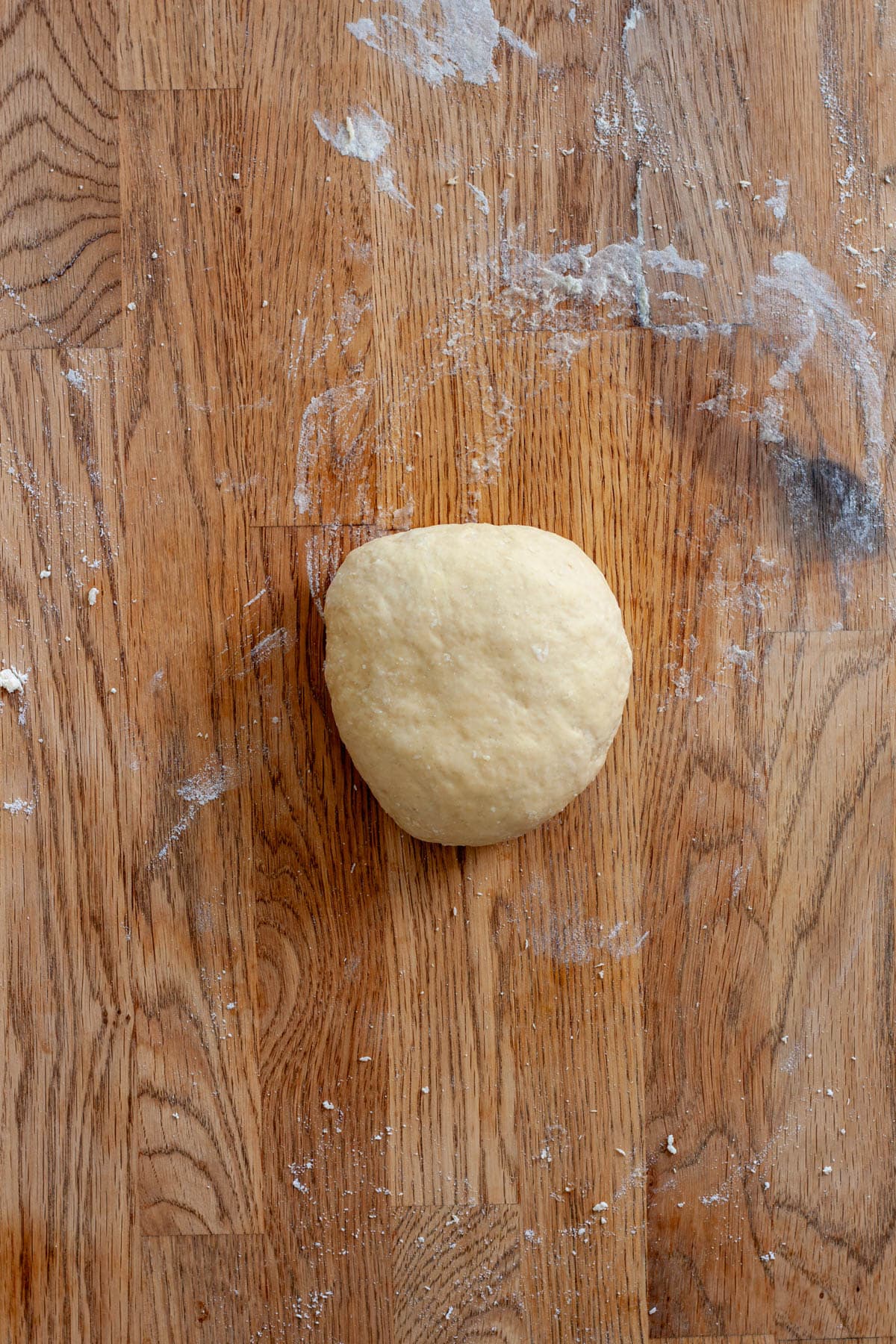
Knead the dough by hand until it's smooth, 3-5 minutes. The dough should be just a bit tacky and fairly soft. Cover with plastic wrap and refrigerate for at least 30 minutes or up to overnight.
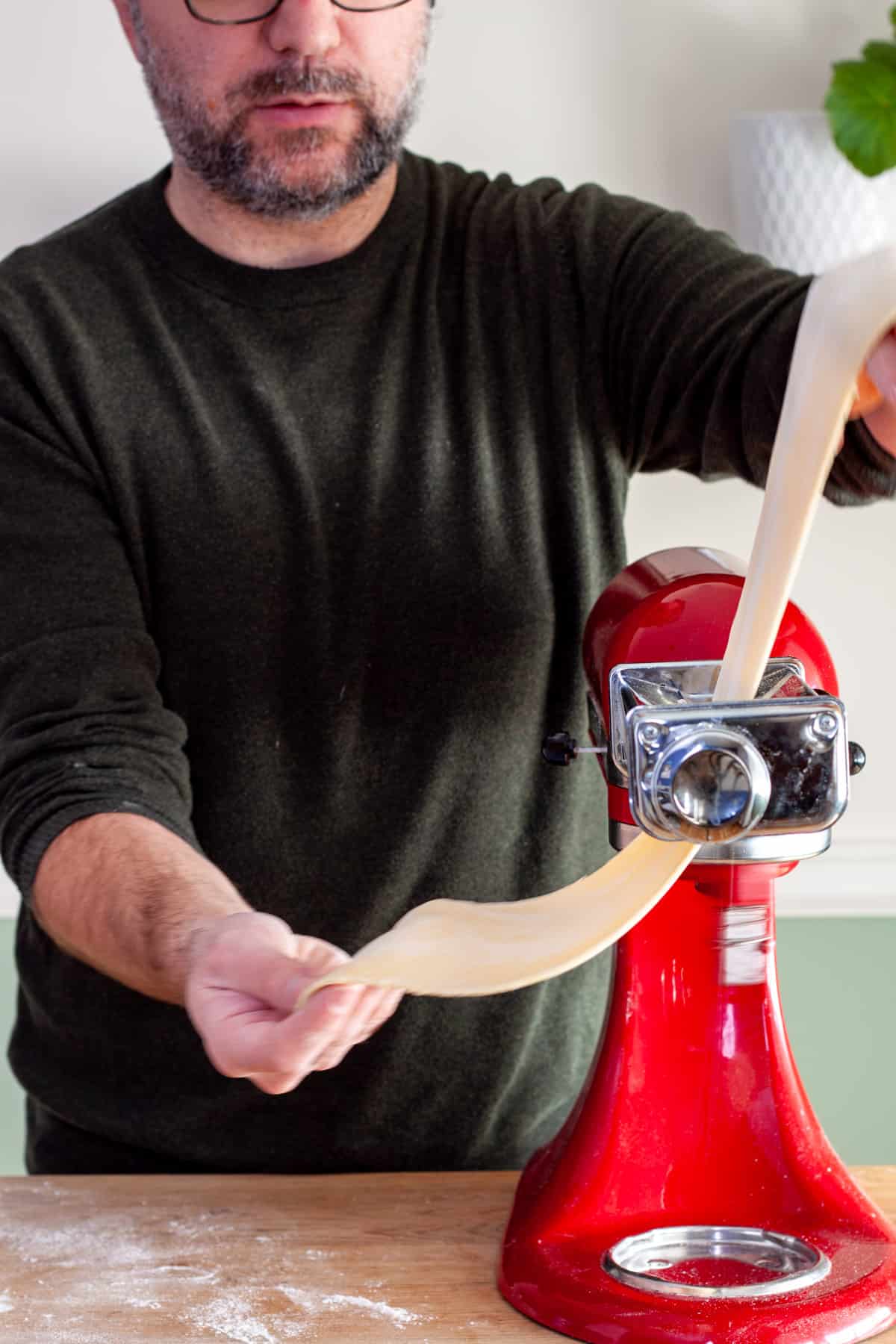
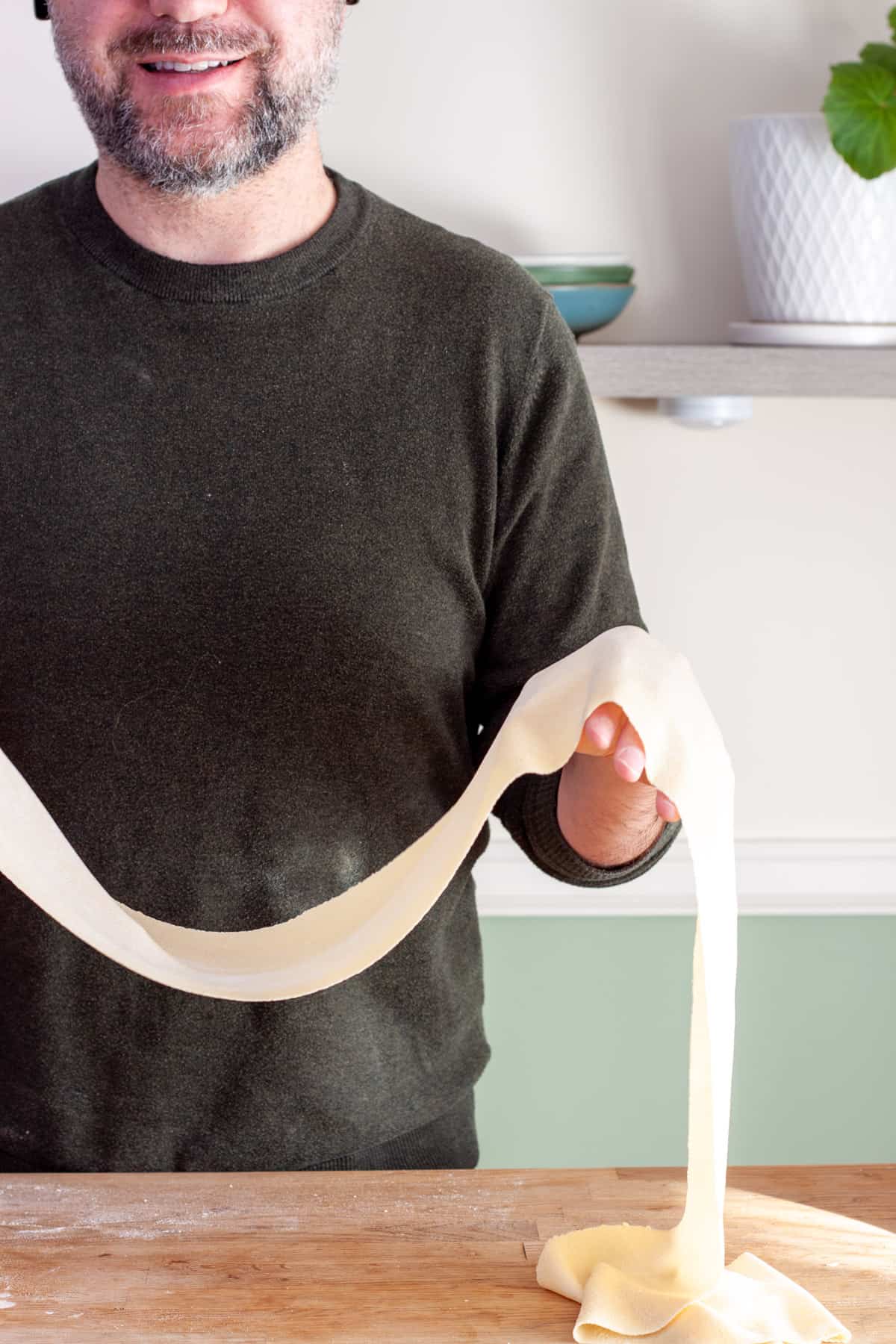
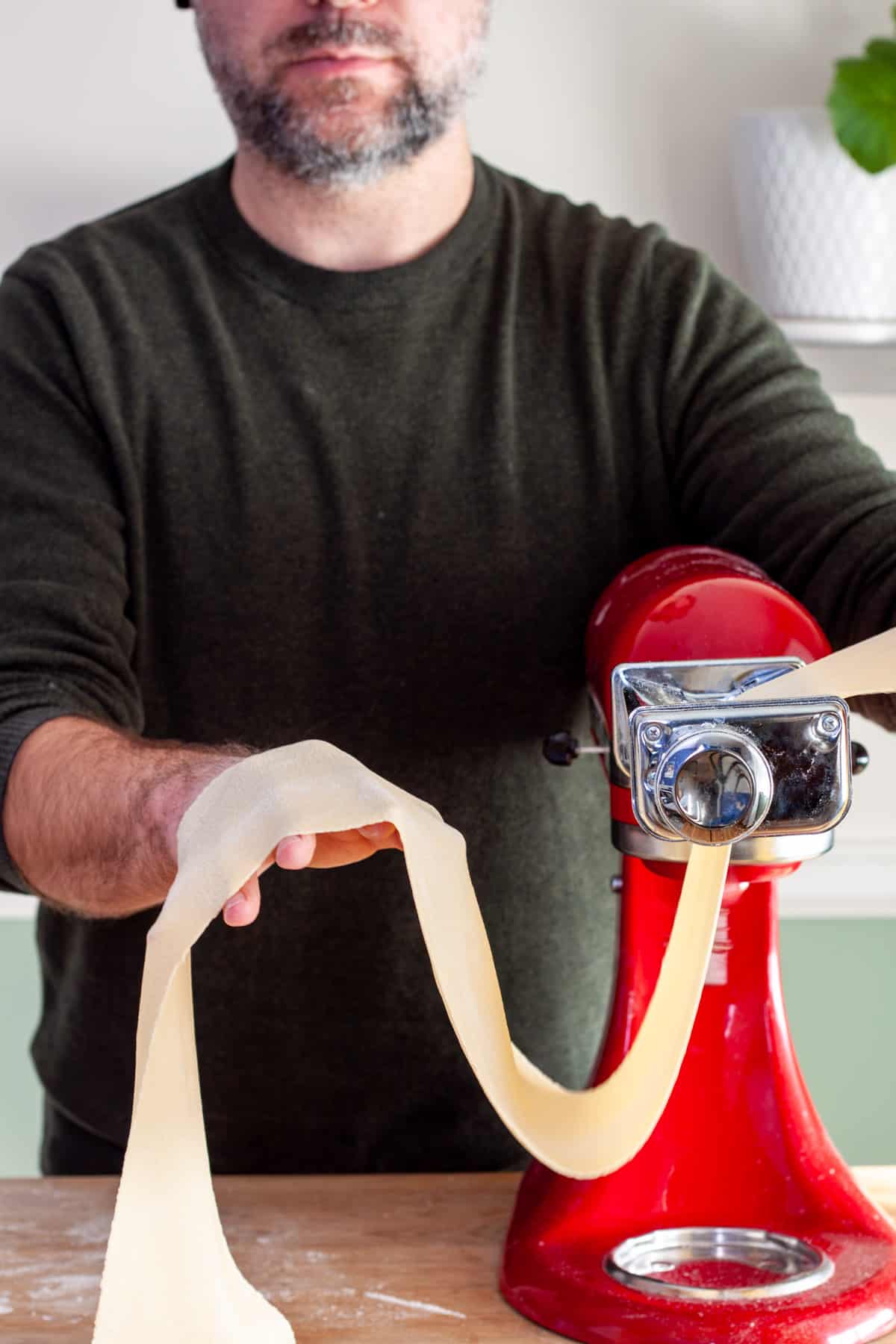
Dush the dough with a bit of flour then pass through a pasta machine. Here you can use a traditional hand crank pasta machine (which attaches to the side of a work surface) or a pasta roller attachment for a stand mixer (show above). Roll the dough to desired thickness (about 2 steps below the thinnest setting for a thicker pappardelle noodle, or thinner for ravioli).
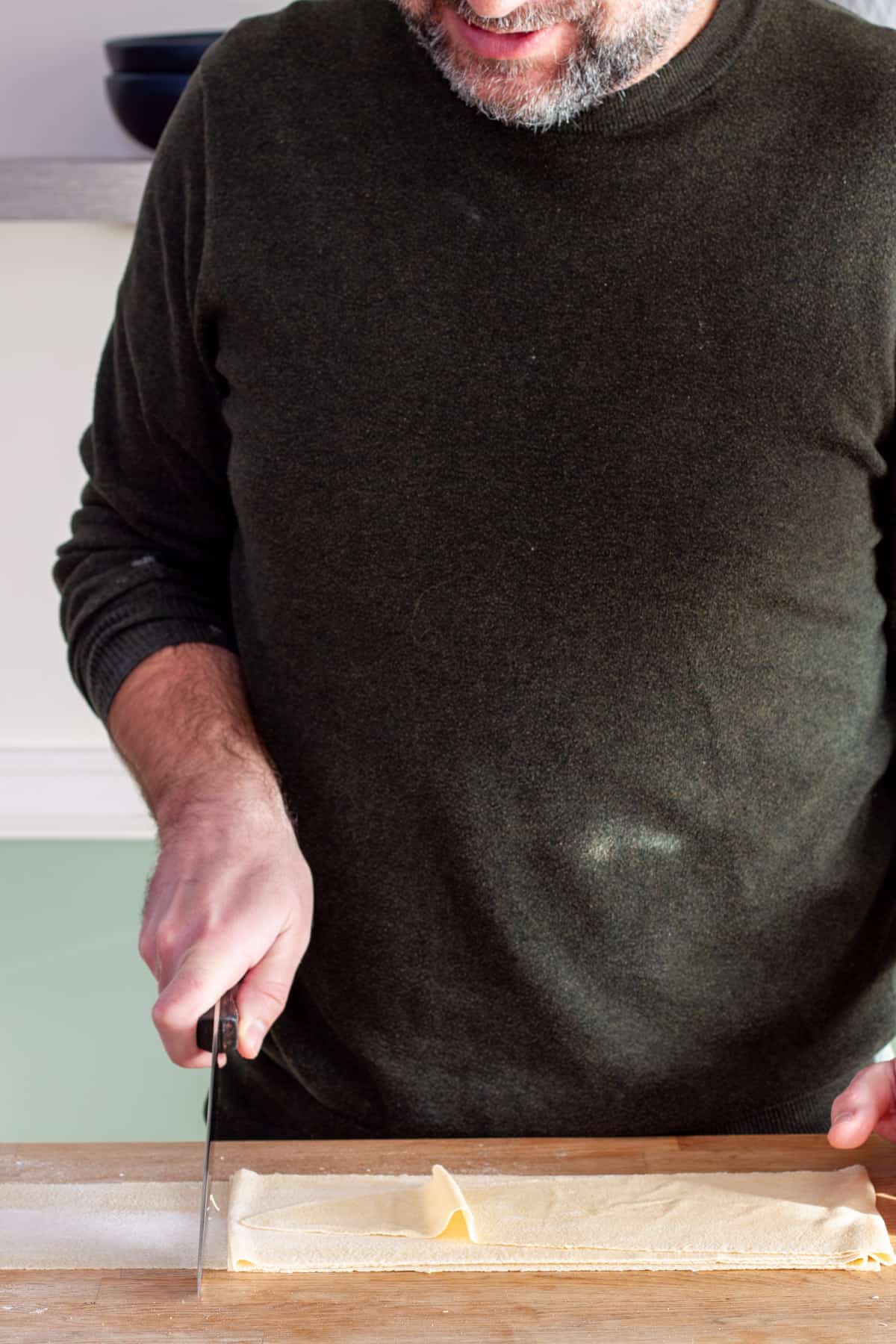
Dust again with flour then cut the dough into sheet, about 8-inches long.
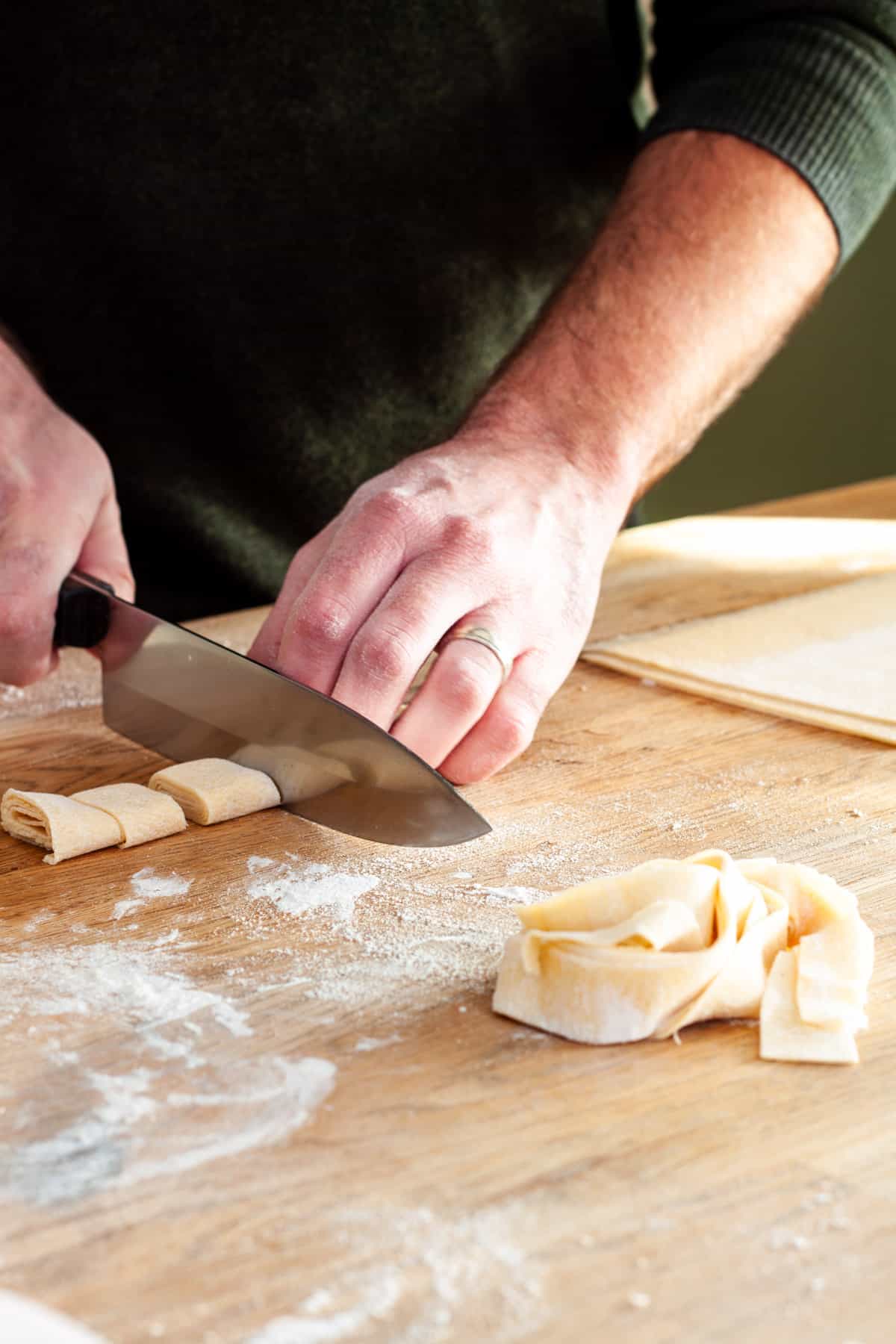
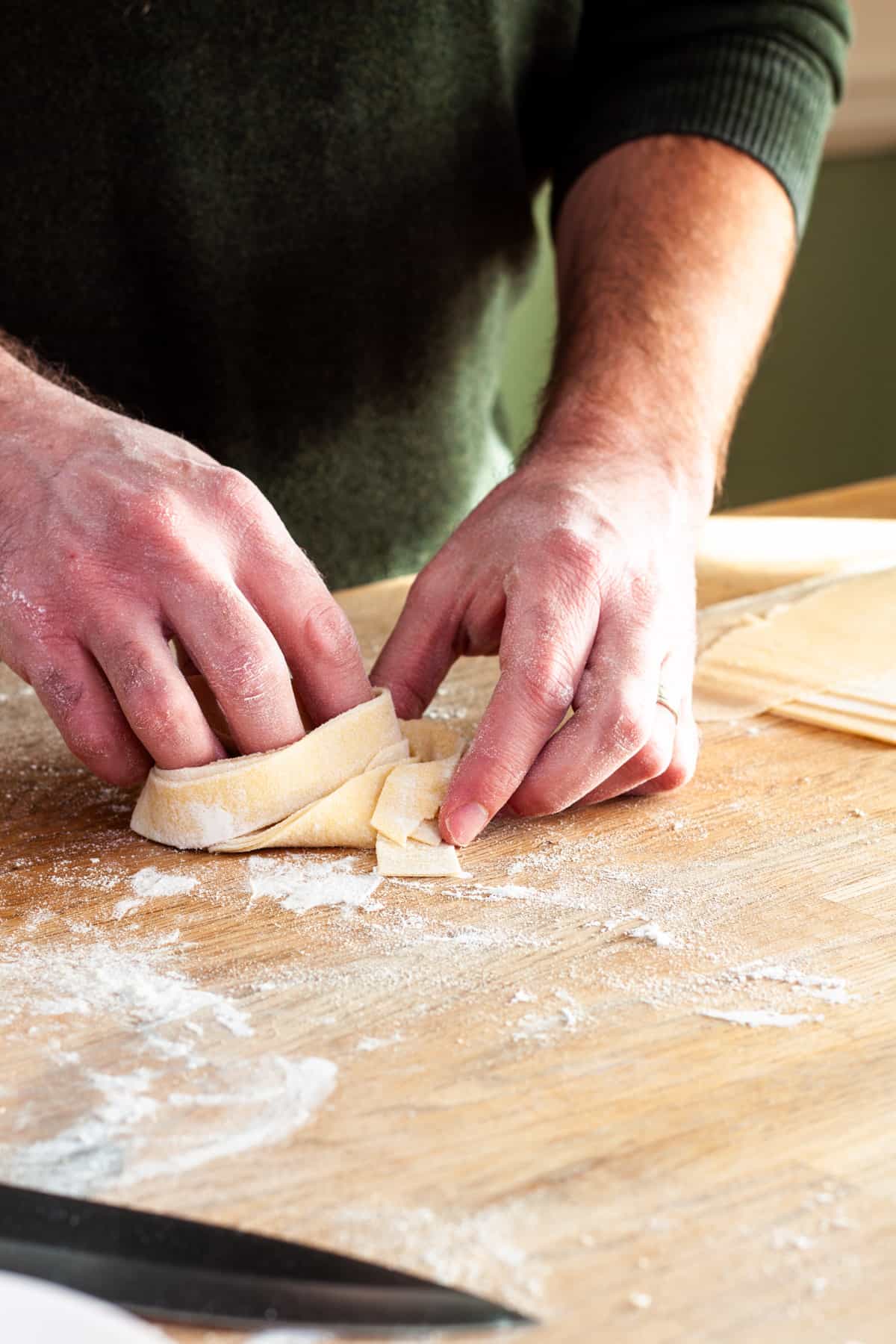
Roll up each sheet then cut to desired thickness, about ½-inch for pappardelle noodles.
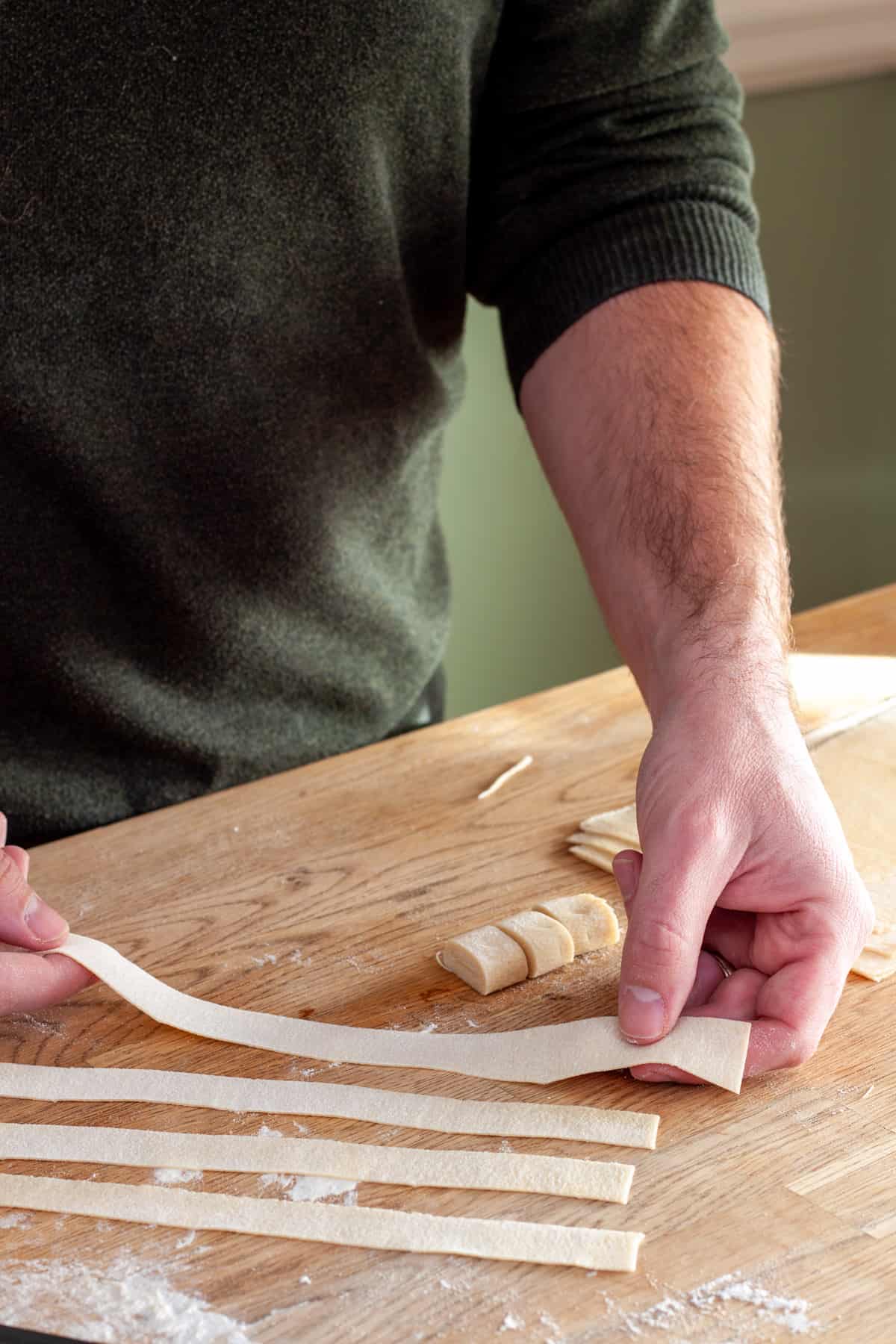
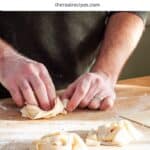
Unroll each noodle and lay flat on a work surface. Dust with flour.

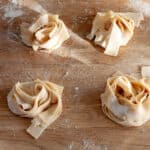
You can collect each bundle into nests and set aside on the counter. Or you can dry the pasta on a sheet tray (dusted with flour) or on a pasta rack. The past is ready to cook immediately, or dry for 1-2 hours on the counter, transfer to an airtight container and refrigerate for up to 3 days (or freezer for up to 3 months).
Fresh Pasta Ratio
There are all sorts of recipes for homemade fresh pasta, but my go-to follows a basic ratio of 1 cup 00 Flour to 1 large egg (plus a pinch of salt). Add as much water as needed, depending on the humidity and how much flour actually makes it into the dough. Extra water could be as much as 1-2 tablespoons, or as little as no added water. This ratio makes about 8 ounces of fresh pasta, which is enough to serve 4.
For 1 pound of 00 Flour use 4 large eggs, a big pinch of table salt and as much water as needed. This is the classic ratio I learned at culinary school, but it simply makes too much. That's why, for my family, I use just 1 cup and 1 egg.
Equipment
The equipment for homemade pasta makes a huge difference. If you have a KitchenAid Stand Mixer, I strong recommend purchasing their Pasta Roller and Cutter Set. We received our set as a weeding gift 10+ years ago and it's stood the test of time. I also use it fairly frequently, so I really can't recommend it enough if you want to make homemade pasta, even a few times a year!
Some of my other pasta machines include this stainless steel Imperia Pasta Maker Machine, Shule Pasta Maker Machine or this VeoHome Pasta Machine. If you plan to make a lot of homemade pasta, consider getting a drying rack like this Pasta Drying Rack by Tinada. Note that some manufacturers of hand-crank pasta machines also make electric cranks; however, I have little experience using them so I can't recommend any.
Storage
Homemade fresh pasta may be stored in an airtight container for about 3 days. It's important the pasta is stored in an airtight container or it will dry out, leaving unpleasant crusty bits on the exterior. For longer storage, transfer chilled pasta to a freezer-safe zip top bag and freeze for up to 3 months.
Fresh vs. Dried Pasta
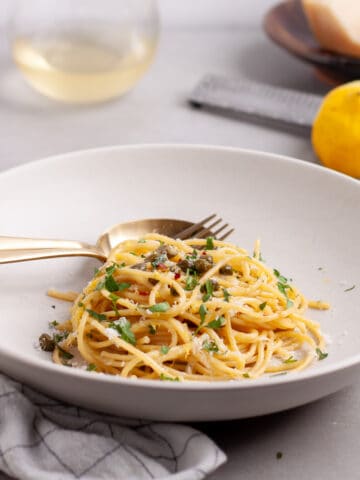
So what is the big difference between fresh and dried pasta? It all comes down to the texture. Dried pasta, the kind you'll find in boxes at the grocery store, are made (often) with a firmer flour and water. The pasta is then dried and packaged. Compared to fresh pasta, dried pasta cooks up firmer and is less delicata. Use dried pasta when you want a firmer noodle in recipes like Spaghetti Arrabiata, Lemon Caper Pasta or our Easy Tuna Pesto Pasta. Homemade fresh pasta is a bit more delicate and tender compared to dried.
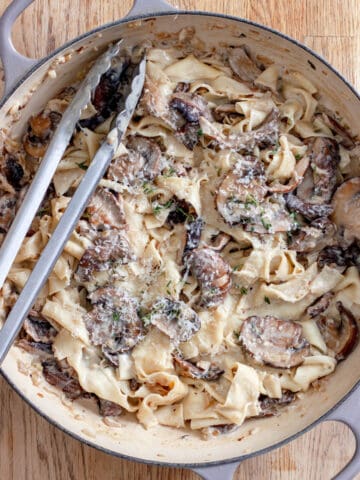
So how should you use fresh pasta? I think fresh pasta holds up best to more delicata sauces, like a rustic Mushroom Pappardelle, a light tomato sauce or even just a drizzle of good olive oil. Of course, as most things go in the kitchen, it all comes down to your preference because you can also serve fresh pasta in lasagna or with a hearty beef stew.
Finally, fresh pasta is what you'll want to use for any stuffed pasta dishes like ravioli.
FAQ
The best flour for homemade fresh pasta is 00 Flour. This super fine flour makes for a sturdy, yet tender pasta dough.
Yes, you can use all-purpose flour (or even whole wheat flour) to make fresh pasta, but it will not have the same toothiness as pasta made with super fine 00 flour.
Wrap fresh pasta with plastic wrap and rest in the refrigerator for at least 30 minutes and up to overnight.
Fresh pasta cooks much faster compared to dried pasta. Fresh pasta is properly cooked in just 1-3 minutes.
More Pasta Recipes
Looking for more pasta recipes? Try these:
Dinner Ideas
Need some inspiration for dinner? Give these recipe a try:
Print


Recipe
How to Make Homemade Pasta
- Total Time: 1 hour
- Yield: 8 ounces pasta 1x
Description
Making homemade pasta is surprisingly simple, and with just a few ingredients and a little know-how, you too can make it for a special occasion or even a weeknight dinner.
Ingredients
- 1 cup 00 Flour
- 1 large egg
- 1 pinch table salt
- water, as needed
Instructions
- Make a mound of flour on a clean worksurface then use a spoon or your knuckles to create a large divot. Add the egg to the center of the divot along with a pinch of salt. Slowly whisk the egg, being careful not to breakthrough the sides of the flour (think scrambled eggs!). Continue to whisk the egg into the flour mixture until a dough starts to form.
- Clean off the fork and use your hands to start to knead the dough. Add water, as needed, to keep the dough supple and slightly tacky. Knead the dough by hand until smooth, 3-5 minutes. Wrap the dough in plastic wrap and refrigerate for 30 minutes and up to overnight.
- When ready to roll, lightly dust a work surface and press the dough into a flat disc. Use a hand-crank or electric pasta machine set on the widest setting and start to roll out the dough. Continue to roll out the dough, decreasing the pasta machine thickness each pass, until desired thickness (about 2 settings thicker than the lowest setting for a noodle like pappardelle or as thin as possible for ravioli).
- Lightly dust the sheet of pasta and cut into 8-inch sheets. Roll up each sheet then cut into desired thickness, about ½-inch for pappardelle noodles. Cook immediately or dry on the counter for 1-2 hours using a pasta rack or make nests and dry on a parchment lined baking sheet.
- Leftover uncooked pasta may be stored in the refrigerator for up to 3 days or transfer to a freezer safe bag and freeze for up to 3 months.
- This recipe makes 8 ounces of fresh pasta, which is enough for 4 servings.
Notes
- The basic ratio for homemade fresh pasta is 1 cup of 00 flour to 1 large egg (plus a pinch of salt and water, as needed).
- To make a larger portion of homemade pasta dough, use 1 pound 00 flour and 4 large eggs.
- Fresh pasta cooks in 1-3 minutes.
- You can use all-purpose or even whole wheat flour to make homemade fresh pasta, but the texture will not be as firm, yet tender compared to 00 flour.
- Prep Time: 20 min.
- Cook Time: 2 min.
- Category: Pasta
- Method: Boiling
- Cuisine: Italian
Leave a Reply