

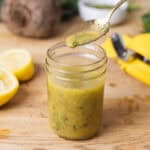
This Lemon Dijon Dressing is bright, balanced, and ready in just 5 minutes. It's my go-to vinaigrette for grain bowls, grilled chicken, and green salads because it's easy to make yet tastes restaurant-quality with simple ingredients.
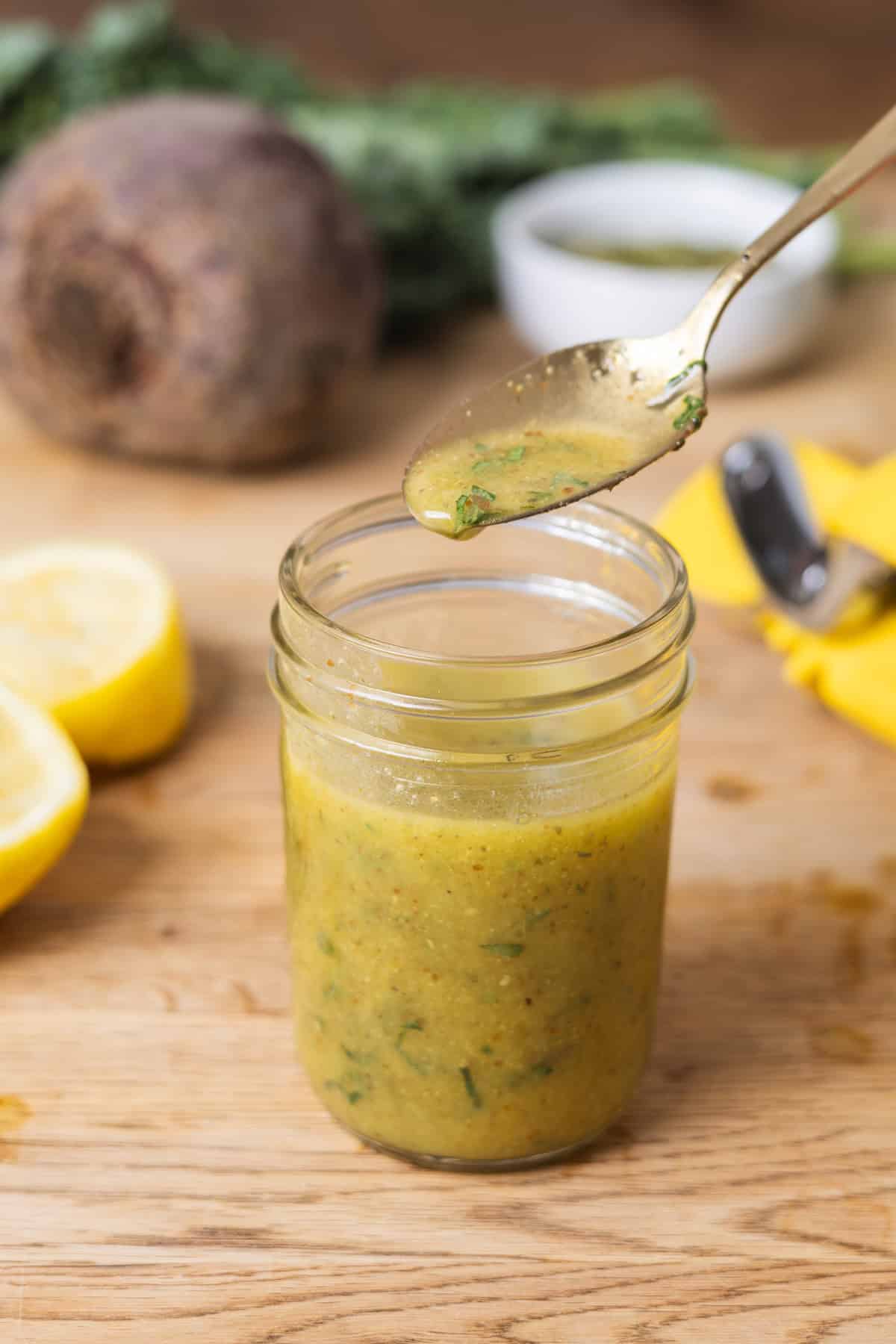
Lemon Dijon Dressing is a classic vinaigrette made with fresh lemon juice, Dijon mustard, olive oil, and salt. The mustard acts as a natural emulsifier, helping the dressing stay well blended.
Homemade salad dressings are one of the easiest ways to cut grocery costs while elevating everyday meals. This lemon vinaigrette is very similar to one I made while working the line of a busy restaurant many years ago, so I still treat this as my go-to house dressing. It's been tested countless times and I'll share with you all the great ways you can use it and how easy it is to adjust to your flavor preferences.
Why You'll Love This Recipe
- Ready in 5 minutes with pantry staples.
- Emulsifies beautifully (no broken vinaigrette).
- Easily customizable; sweet, sharp, or herb-forward.
- Works as a dressing, marinade, or finishing sauce.
Jump to:
Ingredients That Matter
This homemade vinaigrette uses just a handful of simple ingredients you can find at your local grocery store. Here are the ingredients you'll need for this recipe.
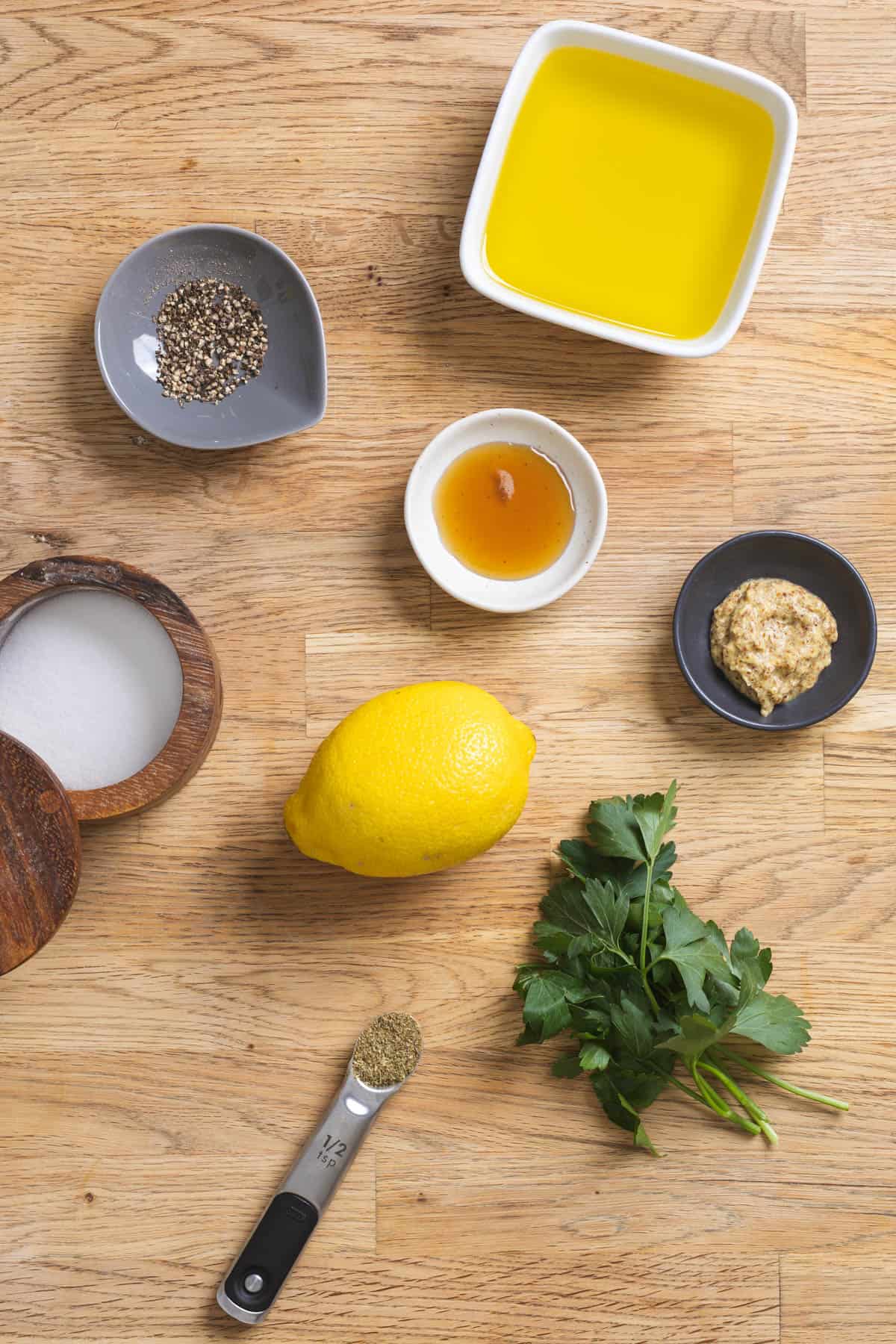
- Lemon. Lemon zest adds a gentle floral flavor while the juice provides acidity. Be sure to rinse and dry your lemon well for the cleanest flavor.
- Dijon Mustard. I prefer a coarse "country" style Dijon mustard for texture and punch, but smooth Dijon creates a slightly silkier finish.
- Maple (or honey). To balance the tart acidity of the lemon juice, add a bit of maple syrup or honey.
- Extra-Virgin Olive Oil. While any oil will do, I prefer a fruity extra-virgin olive oil to complement the lemon.
- Italian Herb Seasoning. A big pinch of dried herbs gives homemade dressings bold flavor. For this recipe, I recommend a simple Italian Herb Seasoning blend for balance.
- Parsley. While optional, finishing the dressing with some freshly chopped parsley leaves adds a pop of fresh flavor.
- Salt & Pepper. I like to use table salt because it dissolves more easily in the lemon juice. You can use black pepper or white pepper.
See recipe card for quantities.
How to Make Lemon Dijon Dressing
This recipe comes together in just 5 minutes. Below are step-by-step detailed instructions on how to make the dressing.
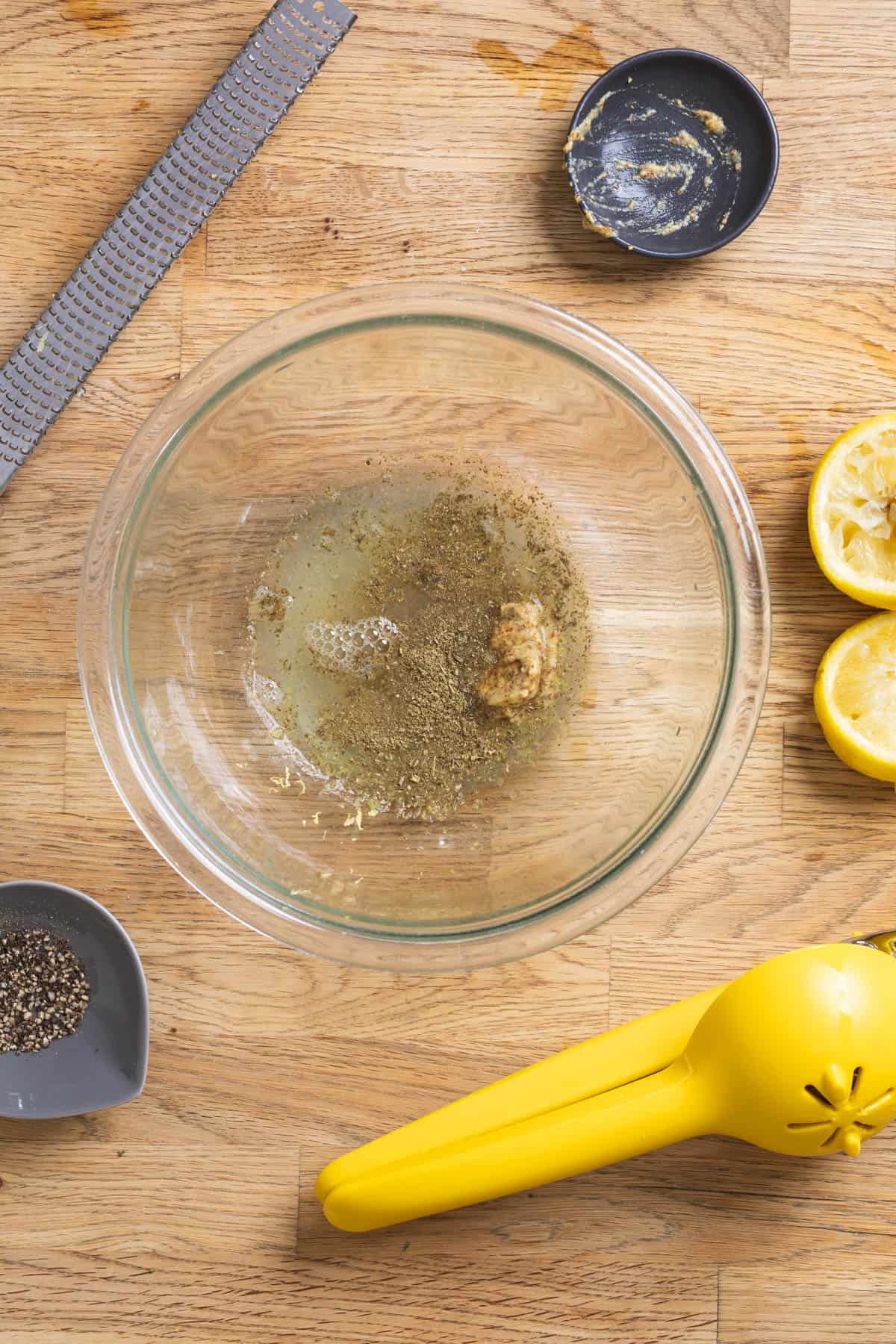
- Zest & Juice Lemon: Start by zesting and juicing the lemon into a medium bowl. Add the mustard, salt, pepper, and Italian herbs.
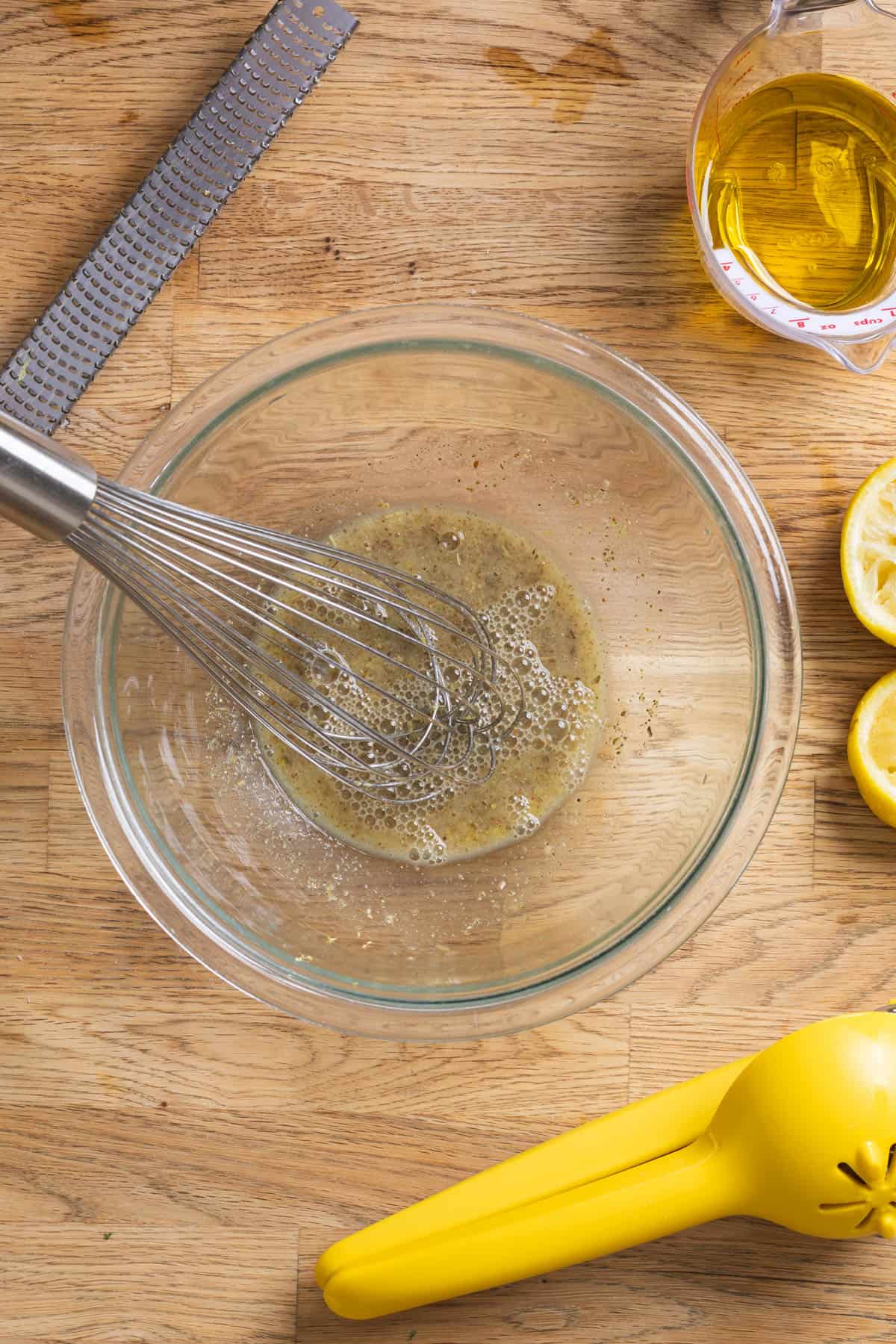
- Whisk in the Oil: Whisk the mixture to combine, then slowly drizzle in the oil while continuing to whisk.
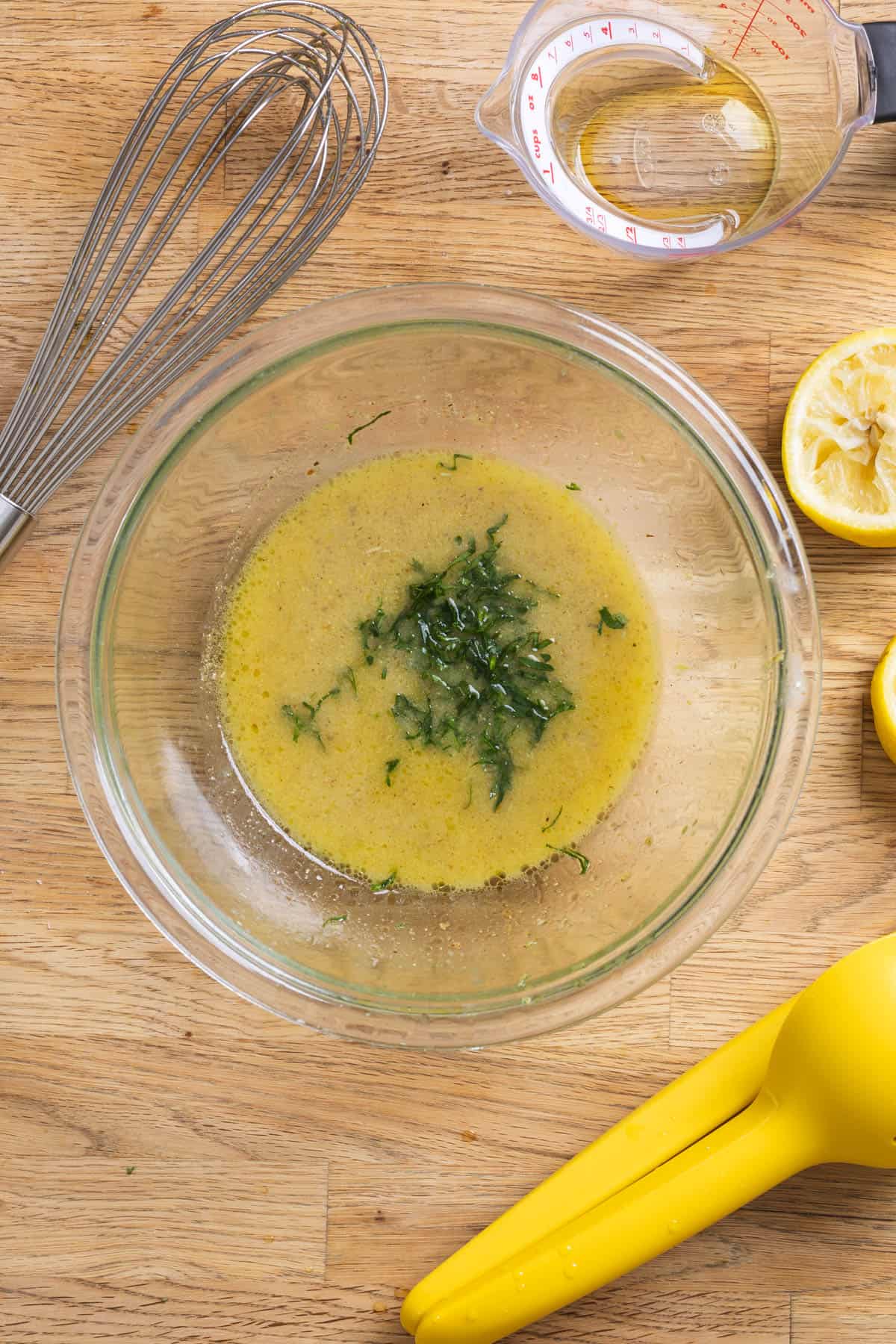
- Add Parsley: Finely chop fresh parsley and whisk into the dressing.
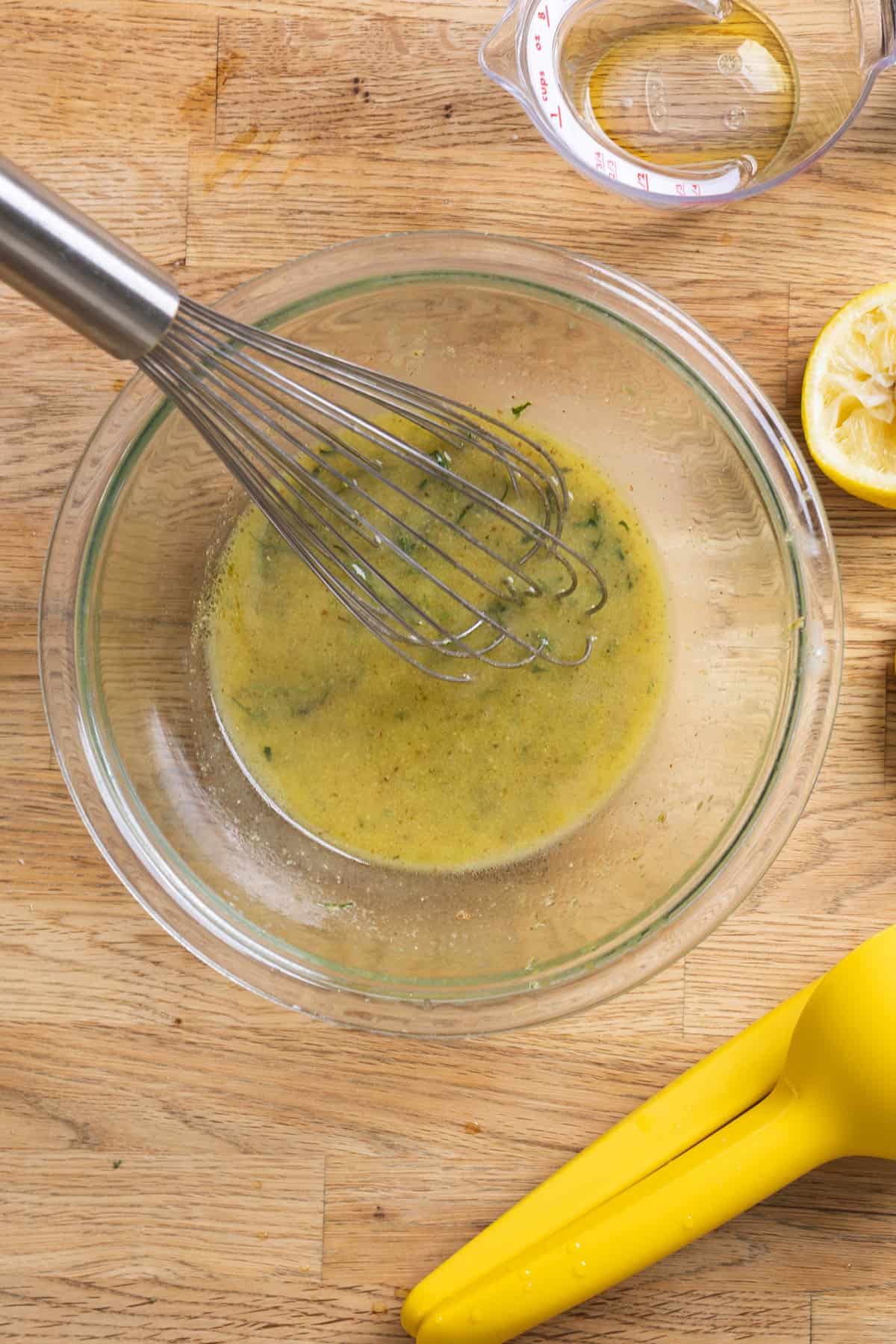
- Adjust Seasoning: Taste the dressing and adjust with more salt, pepper, and maple syrup, if desired.
Adam's Pro Tip
You've probably seen people shake dressings in a mason jar. That works, of course, but only if you're using it immediately. For a stable vinaigrette, whisk while slowly drizzling in the oil. The constant motion breaks the oil into tiny droplets, which Dijon helps suspend in the lemon juice. A properly emulsified dressing tastes smoother, more balanced, and coats greens evenly.
Substitutions & Variations
There are plenty of ways to adjust this recipe based on your flavor preferences or availability of ingredients. Consider the following tweaks:
- Oil - Use any light-tasting oil such as peanut, corn, vegetable, olive, or avocado oil for a more neutral flavor.
- Dried Herbs - Instead of Italian Herb Seasoning, try using dried oregano, thyme, or dill.
- Fresh Herbs - Swap in fresh thyme, oregano, dill, tarragon, or chives instead of parsley.
- Garlic & Shallot - Add 1 small clove of garlic, finely grated along with a minced small shallot for aromatic flavor.
- Spicy Version - A big pinch of crushed red pepper flakes works very well with this recipe but will definitely make the dressing spicy.
Why Mustard Works in Salad Dressings
Dijon mustard not only adds a nice kick of pungent flavor, it also serves as an emulsifier. That means it helps bind together the more watery acid (lemon juice) with the more viscous fat (olive oil). Dijon contains natural compounds that help coat tiny droplets of oil, preventing them from separating quickly. It's my go-to emulsifier for dressings like Basil Balsamic Vinaigrette or Preserved Lemon Vinaigrette.
Other emulsifiers for salad dressings include egg yolks (think Caesar dressing), mayonnaise (which contains eggs), tomato paste, tahini, sour cream, and gums (such as xanthan gum).
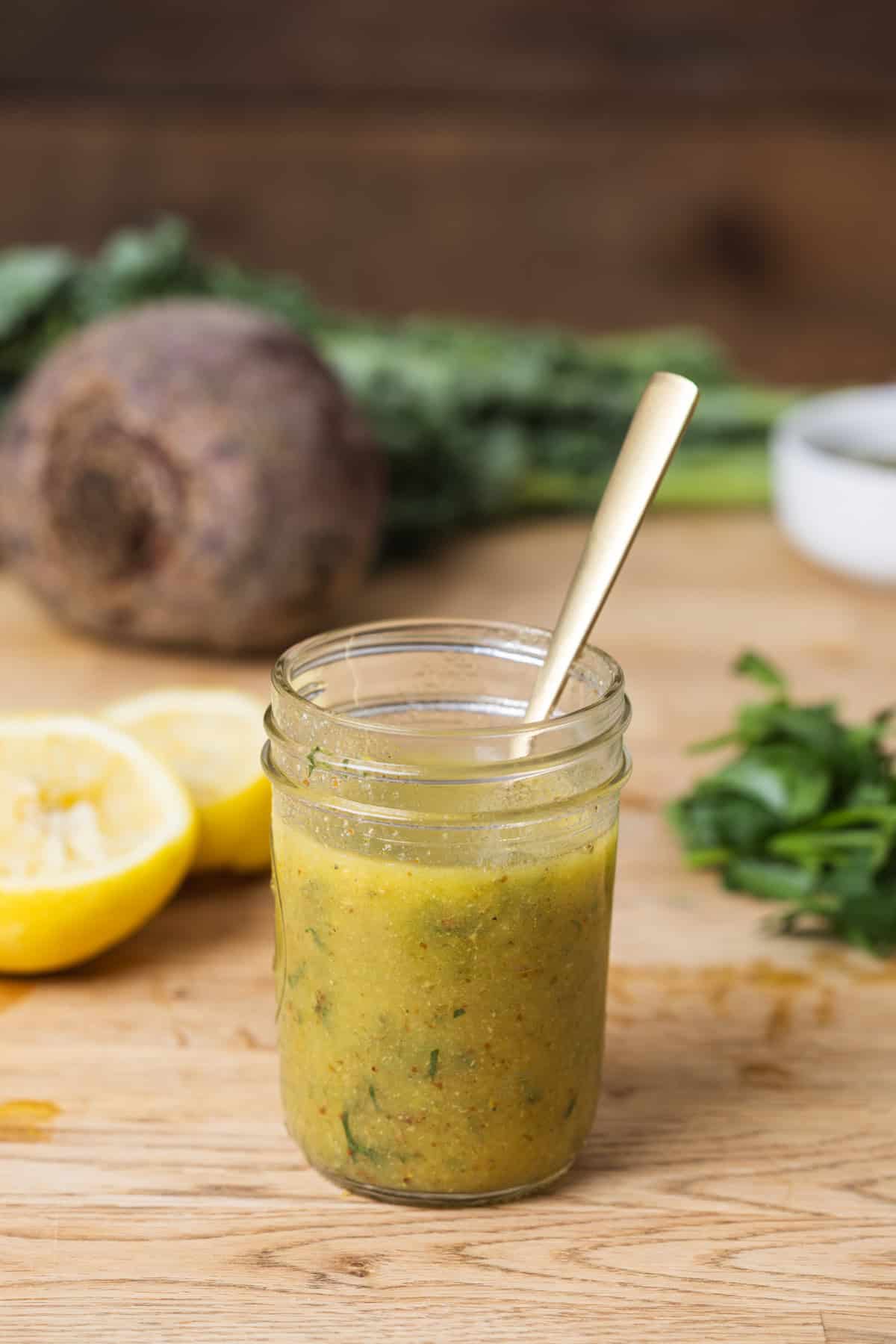
How to Use Lemon Dijon Vinaigrette
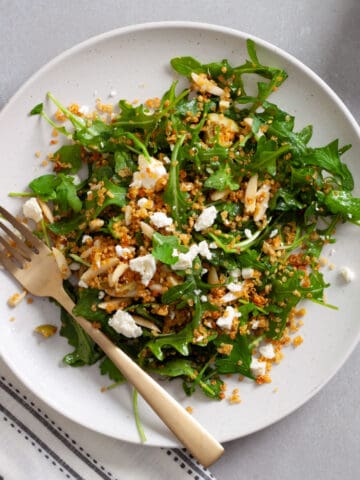
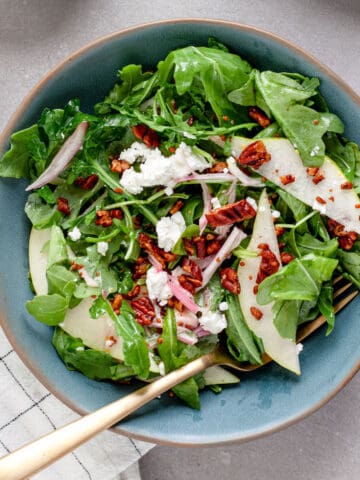
This is first and foremost a delicious salad dressing that goes with just about any salad, like Arugula Burrata Salad or Peach and Goat Cheese Salad or Beet and Kale Salad with Feta and Farro. But don't stop there. Here's other ways to use it:
- Dressing for a potato salad like this Tuna Potato Salad.
- Finishing sauce for roasted veggies like this Roasted Asparagus.
- Marinade for chicken like Roasted Chicken Leg Quarters.
- Drizzle over seafood like Seared Shrimp.
- Dip for crusty bread or pita.
Flavor Troubleshooting
If the salad dressing isn't quite right, here's how to adjust it:
- Too tart? Add ½ teaspoon more maple or honey.
- Too sharp? Slowly drizzle in a bit more olive oil.
- Too flat? Add a pinch more salt.
- Want it brighter? Add a splash more lemon juice or lemon zest.
Storage
This homemade lemon dressing will last up to 5 days when stored in an airtight container in the refrigerator. You can store it in a small mason jar. Some oil separation is normal the longer the dressing sits in the refrigerator. Simply shake it up before using.
Let the dressing sit at room temperature for 10-15 minutes before serving if the olive oil solidifies in the refrigerator. I do not recommend freezing this recipe.
How to Scale this Recipe
This salad dressing uses a 2:1 ratio of oil to lemon rather, which makes it slightly brighter than a traditional 3:1 vinaigrette. If you prefer a milder flavor, simply increase the oil.
You can double or triple the recipe for meal prep; just keep the ratio consistent and adjust salt to taste.
FAQ
Homemade lemon vinaigrette will last up to 5 days stored in an airtight container or mason jar in the refrigerator.
I do not recommend freezing homemade salad dressings.
If your dressing separated, chances are you added the oil too quickly or didn't whisk fast enough. Even well emulsified dressing will separate a bit over time when stored in the refrigerator. Simply shake the dressing up before using.
More Sauces
Looking for other sauces like this? Try these:
Salads
Here is some inspiration for my favorite salads:
Recipe
Lemon Dijon Dressing
- Total Time: 5 minutes
- Yield: ¾ cup 1x
Description
This Lemon Dijon Dressing is bright and balanced, providing a zesty sauce for everything from grain bowls to grilled chicken and green salads. Ready in just 5 minutes, it's my go-to vinaigrette for busy weeknights and endlessly adaptable.
Ingredients
- 1 lemon
- 2 tsp. Dijon mustard
- 1 tsp. maple syrup or honey
- ½ tsp. Italian seasoning
- ¼ tsp. table salt
- ¼ tsp. black pepper
- ½ cup extra-virgin olive oil
- 1 Tbsp. finely chopped parsley
Instructions
- Zest the lemon on a microplane into a medium bowl. Juice the lemon into the bowl (you should have about 4 tablespoons of juice). Whisk in maple syrup (or honey), Italian seasoning, salt, and pepper. Slowly drizzle in oil while continuing to whisk. Add chopped parsley and stir to combine. Adjust seasoning with more salt, pepper, and maple syrup, if desired. Store in an airtight container in the refrigerator for up to 5 days.
Notes
- Swap out the Italian seasoning for dried oregano, thyme, or dill.
- Swap out fresh parsley for chives, dill, thyme, tarragon, or mint.
- You can make this recipe in a mason jar but it won't stay emulsified for long.
- Prep Time: 5 minutes
- Cook Time: 0 minutes
- Category: sauces
- Method: No Cook
- Cuisine: American
Leave a Reply